
How Can Niching and Specialization Lead Your Agency to Higher Profit, with Rob Da Costa – Episode 74.
Welcome back! This week, we chat with Rob Da Costa of Da Costa Coaching about how to lead your agency towards higher profit by way of niching and specialization.
About Rob Da Costa…
In 1991 Rob left his marketing manager role and started his own tech-focused marketing agency. Over the next 11 years built an award-winning business with 25 staff and revenues in excess of £1.5m. He sold the business in 2002 and then retrained to become a coach and mentor.
In 2007, Rob started Da Costa Coaching, working with SME agency owners and leaders to help them grow their agencies in a profitable, sustainable, and enjoyable way. Over the past 15 years, he has worked with over 300 agencies, including Digital start-ups, PR, Design, Web development, and full-service marketing agencies. Rob is the author of The Self-Running Agency and also runs his podcast, The Agency Accelerator.
An avid traveler and wannabe digital nomad, when Rob isn’t advising agencies, he’s out walking his dog on a nearby beach!
Points of Interest…
- Strategies Involved in Specialization for Higher Profits 2:03
- Key Mindset Shifts to Aid Specialization 5:00
- Specialization and Niching 6:53
- Applying Specialization to Leverage Fees 13:59
Strategies Involved in Specialization
I’m really excited to have Rob on the show to unpack an important topic – the concept of specialization. Since founding Da Costa Coaching, Rob has seen a common theme among most agencies; usually, there’s no comprehensive plan in place.
“Over the past 15 years, I’ve always specialised in working with agencies, approximately 350 agencies to date, doing one-to-one coaching as well as group coaching… Often, they will tell me they’re experiencing a specific problem. In actuality, when you look under the proverbial hood, you find it’s something completely different. That’s why I always start with the same question; ‘Do you have a clear plan?'”
Invariably they do, just not one that encompasses targeting. Does it involve money and manpower? Yes. Sadly, that’s about it. Key strategies – including Marketing, Sales, and Pricing – have not been considered. You need to have systems and processes to support growth. Naturally, this leaves Rob in the business of “bubble bursting”; informing clients that they don’t just have an issue with ‘Problem A’, but in fact that their processes (if any) require rejiggering.
To bring more clarity to this; ***at the 3:39 minute mark*** Rob provides an example of a fact-finding mission he undertook for a UK client who thought they had a sales issue, when in fact they had issues with their marketing strategy and qualification process. This led to fewer leads coming into the business, but a MUCH higher conversion rate – great news for the overrun sales staff.
Another classic case of an agency perceiving “lead starvation”, when really it’s indigestion. It wasn’t that they didn’t have enough leads, it’s that they were paying attention to too many. As ever, it’s all about a shift in mindset.
Key Mindset Shifts to Aid Specialization
With that, it’d be remiss not to ask Rob about some of the key mindset shifts he takes clients through and why they’re important as they journey through that planning phase. In Rob’s experience, it usually starts by asking the second most question…
“The first Mindset Shift is a fundamental one; so don’t ask yourself the question ‘Will other people do it as well as me’, rather ask ‘Will they do it well enough?'”
In other words, getting entrepreneurs to realize that their potential competition won’t have the same processes in place is THE most transformative mindset shift they can undergo. If you don’t hone your processes, you will never reach your full potential. According to Rob, another pivotal shift in mindset needs to be around Pricing…
“I know you’ve spoken about value pricing on the show before, and I’m a big proponent of that. And I’ve realized. Getting your pricing right is 50% mindset and 50% strategy. So I think there’s a big mindset shift around pricing – what you and your services are worth.”
In addition to Process and Pricing, another required shift in mindset revolves around – yes, you’ve guessed it – Niching.
***Rob delves a little deeper into Niching and redefining your role as an agency owner from 6:00 minutes***
Defining Specialization and Niching
At this point, it seems fitting to pivot towards the topic of Specialization and Niching as it offers some very compelling solutions around hiring great people that are experts in their field; charging higher fees; being more profitable; and being more deliberate/targeted around marketing. All of the aforementioned issues become far easier to solve when you know exactly WHO you’re solving for. And with it comes more benefits…
“The specialist will always be able to charge more than a generalist… If you needed knee surgery, you would go to a knee surgeon specialist, not your GP. You would pay a knee surgeon way more money than you would the GP, but you’d also trust the knee surgeon to operate on your knee and do the right job. Exactly the same is true for an agency.”
If you try to be a generalist, you’ve got to find a way of differentiating yourself. Usually, attempts to differentiate yourself as a generalist translate into either being cheaper or by promising crazy levels of service. Either way, it’s a race to the bottom.
So, what if you believe you are niched, but – in reality – you’re a generalist within a hugely broad sector, like B2B or Financial Services? Rob recommends going “as niche as you dare, and then broaden out over time.” After all, most agencies tend to ebb and flow over time, based on the way the market evolves and opportunities.
***Rob expands on the true definition of “niching” and how a lot of agencies are not quite hitting the mark from 9:48***
In my personal opinion (and perhaps I’m a tad on the aggressive side); every other way of niching is just a derivative of solving a problem. Stacking up a specific type of service for a specific industry is just a roundabout way of framing out how to solve these issues! Ultimately, if you can start there then work backward, it’s going to be a lot easier to figure out a number of things, such as…
- Which industries have this problem
- Have we solved this problem previously
- Deciphering the best combo of services
- What is this going to mean for our future service offering/positioning; how we communicate it; how we price it
The minute you understand the problem you’re solving, it becomes so much easier to start charging the appropriate fee because you’re not thinking “how many days is this going to take? How many hours? What materials do I need?” Instead, you are now thinking “What is it worth?”
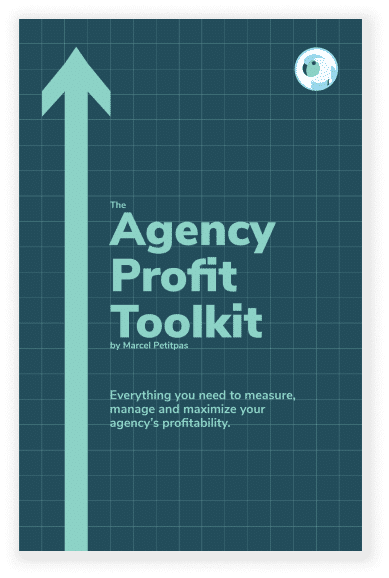
Side note: our Agency Profit Toolkit is a one stop shop for you to be able to outline some of these crucial profitability numbers to a potential buyer. Spreadsheets, templates and training videos, you name it, it’s all in the toolkit. Grab yours free at the link below:
Check your inbox for your free toolkit!
Applying Specialization to Leverage Fees
How do we start applying this new lens to not only increase our fees, while decreasing costs, and thus start to increase our profits from both sides of the equation? According to Rob…
“It’s really important that we build a brick wall between how we operate internally and what we communicate to our clients… Internally, we still need to be recording time to ensure profitability. We might have different hourly rates for different people internally, but none of that is relevant to the client because we’re solving a pain for their pain… That to me, is value-based pricing.”
There is a real problem for agencies that still sell via “time” spent. If that’s communicated to the client, you’re merely getting them to focus on the wrong thing. What they should be focused on is the resulting transformation. As an agency, you need to identify that transformation you’re taking your clients through and then price based on that outcome.
Having these conversations early on with your clients helps you A) understand what’s going on in their heads and B) as a result, you can then comprehend the value this transformation will bring to their company and price accordingly.
So far, we’ve had several analogies – from knee surgeons, to dentists, to brick walls and beyond. So, I felt it fitting to whip out an old personal favourite (the “logo example”) to ***highlight the importance of knowing/understanding what our costs basis is from 17:11 minutes***
Another idea I’d like to impress upon readers/listeners at this juncture is the importance of knowing the difference between Value-Based Pricing and an inferior version of Time & Materials. As previously discussed; there’s a lot of clients that won’t engage in Time & Materials because they’re not comfortable taking on the risk involved. So now, they’re asking you to take on the risk, and chances are you’re not compensating yourself accordingly.
So, to reiterate, value-based pricing is not just Time & Materials scoping and then setting the cap there. Rather, it’s time & material scoping to understand what your cost basis is, and then push the price up as high as you can, by having a conversation with the client regarding the exact issue that needs solving.
Asking the golden question: “What does it mean for your business?” can help you create a decent margin of separation between the Cost Basis and the price to reward yourself for taking on the risk.
Key Takeaway…
Help your team understand whether what they’re doing is a standard service that’s being paid for, or whether it’s an “extra”. Is the client aware that you’re doing something “extra” for them? Has it been communicated adequately? If not, the next time they request this service, and you decline because it’s an “extra” or “bonus” service, they will be left disappointed as they thought it was included as standard.
If/when this happens, you have three options…
- Say ‘yes’ and suck it up, resulting in an over-service by 10%, or whatever it may be
- Agree to it, but stipulate that something else needs to be dropped
- Say yes, but inform them that you will need to charge them more
Alternatively, you could save yourselves the headache by simply communicating exactly what you’re doing for them from the offset. If it’s more than a standard service, let the client know and charge accordingly.
So, folks, we have delved into a trove of important ideas, both from the mindset shift, to the tactical side of what it means to focus on the agency, and leveraging that to optimize success. Should you want to do a deep dive into Rob’s brain, you can do so by following the links below!
Want to see more from Rob?
- Da Costa Coaching
- Rob’s Agency Accelerator Podcast
- Rob’s book The Self-Running Agency
- YouTube
Did you learn anything new from this episode? Let us know in the comments below! We have a load of helpful blogs designed to bolster your agency profitability, such as How To Calculate Your Billable Employee Cost-Per-Hour.
Our next installment of #APP, on December 1st, will see us chat with Vito Peleg. Our previous blog withRobin Waite ishere…
Agency Profitability Tool Kit
If you’re looking for more resources to help you improve your agency’s profitability, check out the Agency Profitability Tool Kit. It’s full of templates and checklists used when consulting clients. This helps them improve profitability by over 100% in under 60 days.
Check your inbox for your free toolkit!
Written by
Sheena McGinley
Free Resource
Free tools, templates, and training videos to measure the right metrics and improve your profitability.
Free Consultation
Schedule a free consultation with a profitability expert to find out how much money you're leaving on the table.
Free Consultation

About this Episode In this Agency Profit Podcast episode, Marcel sits down with Dr. Matthew Jones, clinical psychologist, founder of Co-Founder Clarity, and author of The Cofounder Effect, to unpack why co-founder relationships are uniquely complex and how to manage them with both an operational and interpersonal lens. They explore the biggest red flag—recurring disagreements […]

About this Episode In this episode of the Agency Profit Podcast, Marcel is joined by M&A expert and Tower Partners principal Todd Taskey to unpack how agency owners can use mergers and acquisitions as a strategic evolution of their business rather than a final exit. Drawing on two decades of deals in the digital marketing […]

About This Episode In this episode of the Agency Profit Podcast, Marcel is joined by longtime collaborator and agency operator Carson Pierce to tackle a deceptively simple headache for service firms, recognizing revenue in a way that actually matches the work getting done. They unpack cash versus accrual accounting in plain English, why cash makes […]

About this Episode In this episode of the Agency Profit Podcast, Marcel is joined by longtime agency owner and Sales Loop founder Mark Drager to unpack the Core Selling Identity Framework, a tool designed to help agencies align their go-to-market strategy with the way they’re naturally wired to sell. Drawing on nearly two decades of […]

About this Episode In this episode of the Agency Profit Podcast, Marcel is joined once again by operations expert Carson Pierce to unpack one of the most misunderstood but critical revenue models in the agency world: retainers. Together they trace the history of retainers from professional services to modern digital agencies and explain why the […]

About this Episode In this episode of the Agency Profit Podcast, Marcel is joined by Michael Zipursky—founder of Consulting Success and a leading voice in the world of consulting—to explore how solo consultants can scale their businesses without losing their freedom or profitability. They unpack the key differences between staying lean as a high-earning “super […]

About this Episode In this episode of the Agency Profit Podcast, Marcel Petitpas is joined by Drew McLellan, founder of Agency Management Institute, to unpack what profitability really looks like at different stages of agency growth. Drawing on decades of experience and financial data from more than 250 agencies, Drew explains why every agency can […]

About this Episode In this episode of the Agency Profit Podcast, Marcel sits down with Stephen Woessner, CEO & Founder of Predictive ROI and author/podcaster with 30 years in the industry, to unpack how agencies can win in a low-trust, AI-noisy market by selling with authority. Stephen shares why trust now starts below zero and […]

About this Episode In this episode of the Agency Profit Podcast, Marcel Petitpas is joined by Carson Pierce to unpack one of the most persistent and misunderstood profit leaks in agencies: how account and project management time is priced (or not priced) into client work. Drawing on years of operational experience, they challenge the outdated […]